
A project that gives an opportunity not only to hear, but also to see the voices of the past
November 4, 2017, Kremenchuk, Ukraine
About the project
This project is one of the first attempts to open the veil of history and look at the tragedy that happened to the Roma during the Second World War from a different, somewhat unusual, point of view. The focus of Tetiana Storozhko’s research is the theme of genocide in the memories of children, whose experience has long been ignored and remained unclaimed.
In the intelligence text, we are looking for answers to numerous questions.
Why was almost no attention paid to the memories of Roma children? How and what do these witnesses of history remember? Do we need to remember these events and why? What lessons should humanity learn from this experience? And how to convey its significance to modern society?
The graphic part of the project was an attempt to answer the last question. Through art, we try to make the voices of the past visible and understandable, turning them into visual images.
In the center of each poster is an object or a symbol that was vividly etched in the memories of informants and was often the key to salvation in the brutal conditions of everyday life. In this way, we wanted not only to convey to a wide audience the few unique stories that managed to be preserved, but also to bring the problem of war and childhood to another level of understanding, where the experience of surviving in a hostile environment for a child of the Second World War period could be universal and reflect the stories of hundreds and thousands of other children not only in the wars of the past, but also in the armed conflicts of today.
The project should also draw attention to the problems of childhood in today’s conditions of increasing levels of xenophobia and Romaphobia, when due to the inaction of the relevant authorities and the exacerbation of right-wing extremism in spontaneous settlements of some socially excluded Roma groups, during attacks and arson attacks, it is their smallest inhabitants – children – who suffer the most.
Tetiana Storozhko:
The topic of the Roma genocide remained on the sidelines of scientific research for a long time. And although with Ukraine gaining independence, the topic of the Second World War was at the center of numerous public discussions, and historical science accumulated a significant number of works devoted to the course of military operations on Ukrainian lands, the Roma topic was not actually covered in these studies. Ban on studying the so-called of “ethnic” stories disappeared only with the collapse of the Soviet Union. Currently, there is a revival of interest in the Roma topic in international scientific circles, but it will take a lot of time for national scientists to start paying attention to it on an equal basis with others.
This project is designed to return to history another “forgotten” face – the face of Roma children who, together with their families, were victims of mass extermination by the the National Socialist occupation regime during the Second World War.
The collection of memories of the witnesses of the Roma tragedy began at a time when a significant part of the Roma, who were adults at the time of the war, had already passed away. Children, who became eyewitnesses of military actions, are actually the last generation that can personally share the experience of life in wartime.
One of the largest initiatives, within the framework of which such testimonies were collected, was the project of the Fund of historical video documents “People who survived the Shoah”, founded by S. Spielberg. Today it is one of the largest archives of digital video materials in the world. Compared to other collections of the fund, the Roma collection is relatively small and amounts to 407 interviews. Research work was conducted in 18 countries, and the collected evidence is available in 17 languages. The lion’s share of memories were recorded in Poland (181) and Ukraine (135). These materials formed the basis of our project.
In the conditions of occupation, life takes on a new rhythm, established social ties are destroyed or fundamentally changed, completely different values and goals come to the fore, among which the preservation of life is first and foremost. It is children who become one of the most unprotected categories of the population, and for those of them who were covered by the so-called “special treatment” of the warring parties – the chances of rescue were many times smaller.
In their stories, informants often refer to stories about suffering, wandering, and the constant struggle for survival. The theme of family relationships runs through almost all the records as a very bright line, memories of orphanhood and forced premature adulthood are emotionally complex. The fate of completely orphaned children was much more difficult, as they had to take care of themselves.
Lack of food was the main problem that the Roma, like many other inhabitants of the occupied territories, faced on a daily basis. The retreat of the Red Army from the territory of Ukraine was accompanied by the use of “scorched earth” tactics. In order to feed themselves (and sometimes adult members of their families), children had to beg or work hard.
Among the most common narratives are interactions with non-Roma neighbors and occupiers; forced movement or hiding. In order to survive, one had to carefully hide one’s ethnic origin. It was often difficult for the occupiers to identify the Roma, so they enlisted the help of henchmen from the local population. But this principle also worked in the opposite direction – sometimes the intercession of someone from the local non-Roma population could be enough to save whole families even on the edge of the firing pit.
By the way, it is worth noting that not all occupiers in children’s memories appeared as potential enemies that instilled fear. Some Germans who lived in the homes of civilians helped them with food and household goods, etc.
Despite their vulnerability, in some places children still managed to survive. It is difficult for us to talk about at least an approximate number of such cases, because those memories that were managed to be recorded are only a drop in the sea of life stories that were caught in the storm of wartime. But along with this, it is worth remembering those who did not manage to escape and whose stories will never be told.
Today, even the few memories that were recorded and stored in archival repositories of scientific institutions and public organizations remain unclaimed – and above all by the Roma community itself. These materials are used mainly in the academic environment, but for the general public they are only the silent voices of the past. Such a situation cannot contribute to an effective solution to the problem of preservation of historical memory. And without a connection with history, it is impossible to destroy the borders based on numerical stereotypes and prejudices, and to overcome the anti-Roma sentiments prevalent in modern society. This project is intended to initiate changes in such a situation.
Each fragment of the interview we have chosen is a story about survival strategies: finding food, means of livelihood, about support and salvation, about heavy losses and the harsh everyday life of war, which its smallest witnesses and participants – children, faced face-to-face.
When creating graphic images, it was important for us not to limit ourselves to the usual illustration of stories. In the focus of each story are bright things-symbols that have become key in these memories. On the one hand, it will make it possible to convey to a wide audience the few unique stories that have been preserved. On the other hand, it will bring the problem of war and childhood to another level of understanding, where the experience of survival in a hostile environment for a child during the Second World War could be universal and reflect the stories of hundreds and thousands of other children not only in the wars of the past, but also in the armed conflicts of today, in particular , the war in the East of Ukraine that is relevant for us.
In different countries, the tragedy that happened to the Roma happened in different ways, but what was definitely common to all numerous groups in different countries – the suffering of children. We hope that the search for common symbols and ideas about the past will serve as an impetus for the development of new forms of representation of the Roma’s own history in the public space. The project should also draw attention to the problems of childhood in today’s conditions of increasing levels of xenophobia and Romaphobia, when due to the inaction of the relevant authorities and the exacerbation of right-wing extremism in spontaneous settlements of some socially excluded Roma groups, during attacks and arson attacks, it is their smallest inhabitants – children – who suffer the most.
read the story
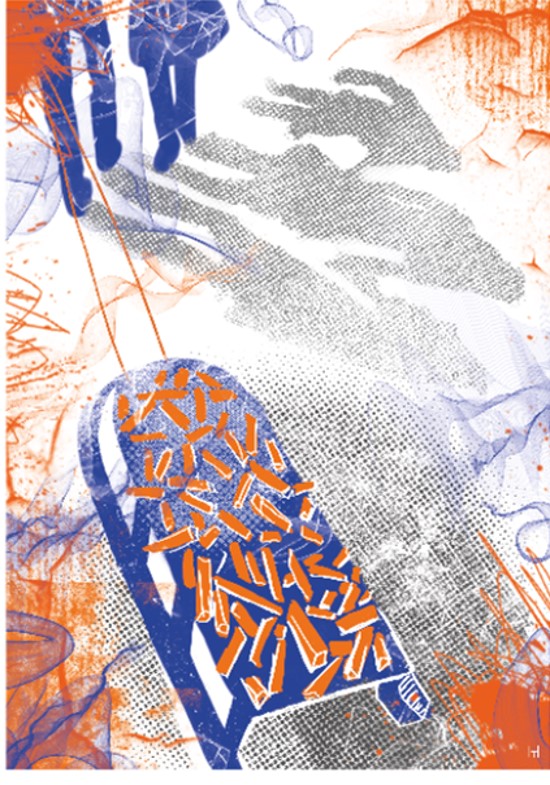
And Jews lived in our city. There was a family right next to us: a man, a woman, and two children. Then they left for Israel. The old woman hid them in the basement. And many Roma were beaten on the street. They collected them, took them to the mines and shot them. And who was hanged right on the street, in the market. They shot…, blood flowed straight down the river, two kilometers along the highway. At the same time, there was a sosha (that is, paved with stones). Fear Both Jews and Gentiles. Everyone, everyone. Doctors, teachers. Partisans killed a certain German commander. So they shot every third man for that. Every third. One, two, the third was shot.
There were also partisans in the city. One lived in our house. I didn’t know, but Grishka’s brother knew. This was the old neighbor’s women son. My brother made a hole in the stove in the oven. You know the oven. He dug a hole in the slab and hid him there. And the brother knew this and said: “Galya, go to the old woman, you will sweep the yard!”. And there the Germans smoked cigarettes and threw cigarette butts. And the girls and I will sweep up the trash, pick it up, but God forbid you pick up a cigarette. They did not give it, they were very angry. They did not want to be taken after them. And we will sweep, pick up the garbage, and then sort it. My brother gave this to the partisan. And who knew that? My parents were beaten, and we were the two on our own.
And the third child.. sister, I’m telling you, she froze. She went to beg for bread and froze. We have already brought the dead body on a sled. What should we do with her? It was forty degrees of frost, so we put her in the first coridor. And the dogs ran up and gnawed.
There was a door to the house, but there was no door to that corridor. My brother took it off, chopped it up and burned it. Because there was nothing else left to heat the house.
read the story
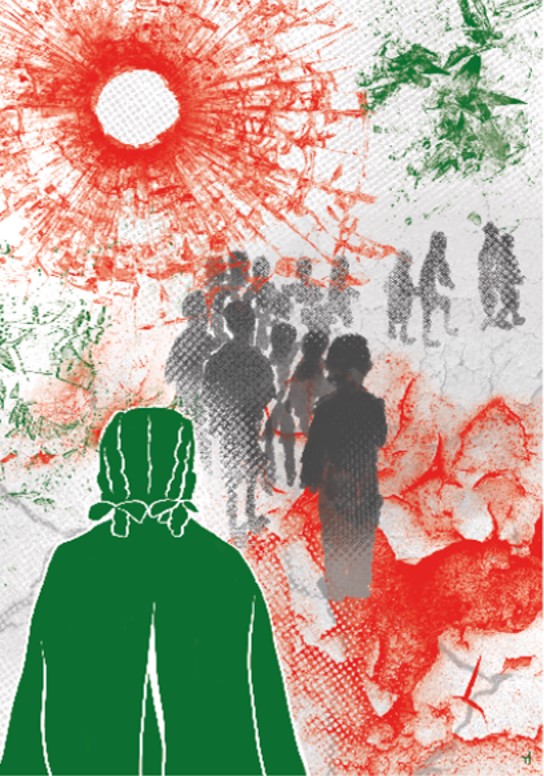
As soon as the Germans entered, they immediately started to call us “zigeuner”. I can’t say that they immidiately set up guards for us, no. But it was already over us and over the Jews, they immediately gathered us… They did not gather us, but they told us not to go out anywhere – registration would go on. Those children whose father was Jewish and their mother non-Jewish, or vice versa, got blue stars on their chests. In my opinion, this star had six corners.
Here, for example, in Kakhovka, I saw these stars on childrens chests … They were gathering … For re-registration and they led my friends and me with them.
I was taken from theirs yard. When they came to pick them up, we were in the yard playing. There were no fences, nothing. We lived as one family. And they took me with them.
The Jews were taken to be shot. And me with them. Well, I passed, I didn’t even reach the corner – the policeman stoped me… Well, they grew up with my brothers together, and he snatches me from this crowd … There was dust and we all walked together and with the children, with my friend Lily, holding hands . He grabed me and said: “Where are you going, Lena?” And I said: “With Lily.” He said: “Immidiately go home!” And he took off his jacket and put it on me …
And he shouted to me: “Quickly get out of here.” And I ran away, ran into the yard. Of course, the parents did not come out. I myself ran into the courtyard and there instantly I went into the room and we didn’t go out anymore. Neighbors said don’t go out anywhere.
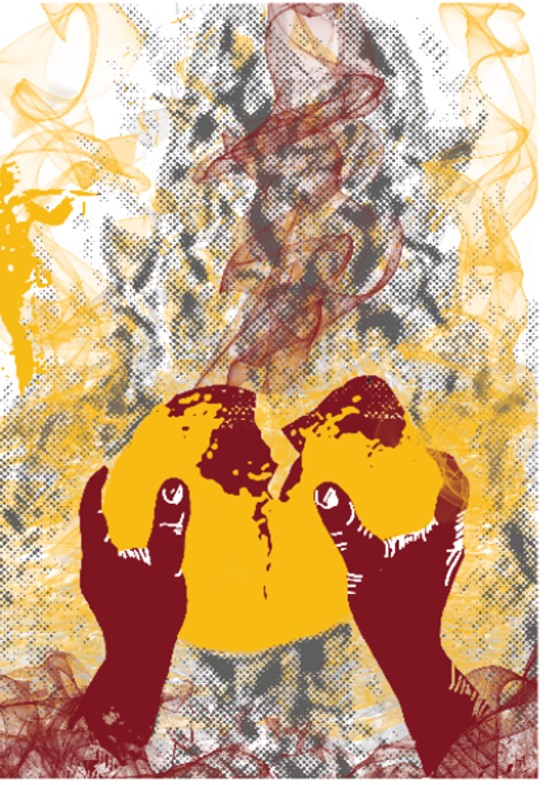
read the story
I remember how the Germans retreated. Quiet at first. When we retreated, we did not even hear that the Germans had left the hut. And when at dawn my mother got up, she told us: “Listen, Nikolai, something is quiet in our village.” And before that, they wanted to shoot us.
Yes, my mother already told me this, then according to my mother’s words, she says that the car was covered and that day we were to be shot at night. These Roma were collected to be shot.
Yes, we were already sitting on guard, my mother was near the window … And then, when morning came, I look and said: is that car not there anymore? That car disappeared. And when they left, mother said: “Children it’s not here anymore, it’s quiet, calm down”.
And then, when it was already dawn, when they were already leaving, well, it wasn’t already, they liberated almost half of the village, so they started burning it … They burned warehouses with bread and stood with machine guns and guarded, – if you want bread, climb into the fire and take it, but they didn’t let it stew. So my father, under fire, climbed there into this barrack for bread. Well, he was already burnt, I remember that. And that’s just when they burned it all, then they left.
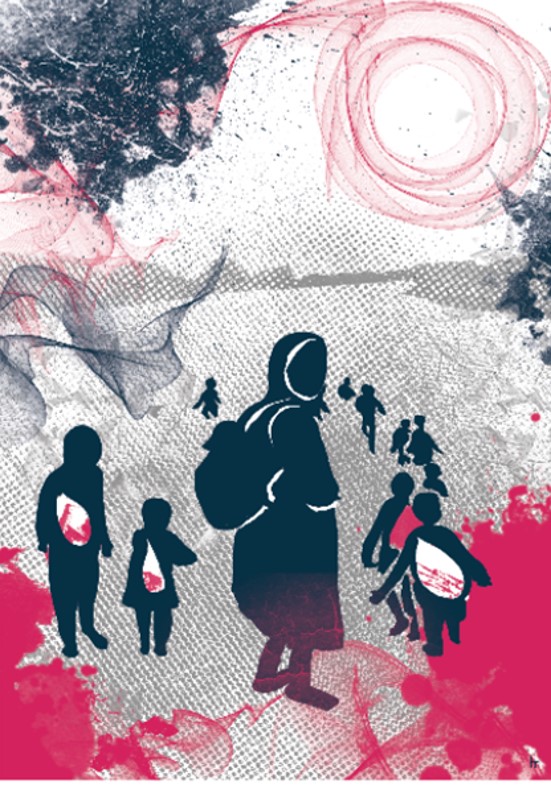
read the story
During the war, there were six of us in the family. There are three of us, and there is one and… – five. There were six, one girl died. Well, there were five left. The older sister looked after everyone, cooked food. She babysat everyone. I couldn’t go to school, because my father didn’t allow…
And I went around the village asking for food. Well, you go into the house – “give a piece of bread…” Well, people gave. Thank to them, they did not refuse. They gave a piece of bread. Well, lard was rarely given. They gave me potatoes… I put it all in a bag and carried it home.
Here, after the war started, this… We were wondering from house to house and bagged. And what people gave, we put in a bag.
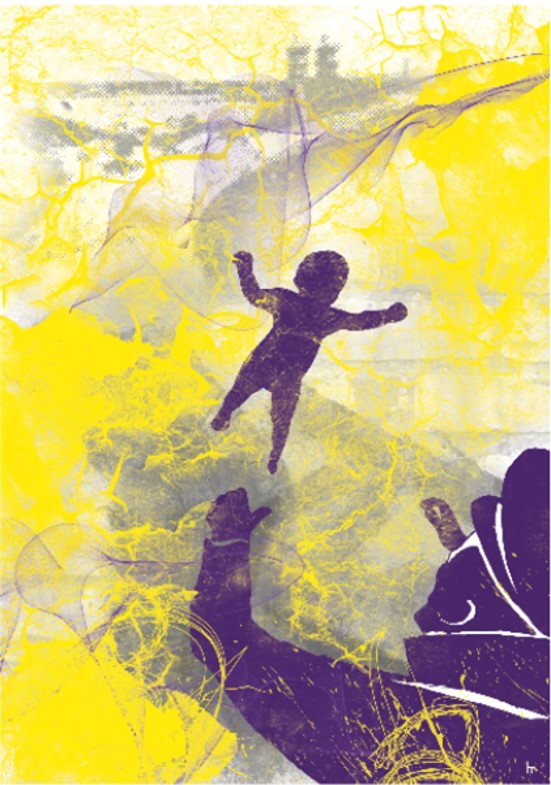
read the story
My grandfather often recalled a story from his childhood, how a German officer saved his family! This event took place at the end of the war, when the German army was retreating. At that time, my grandfather’s parents lived in the city of Kremenchuk, a small town that stands on the bank of the Dnieper and is accordingly divided into two parts by the river. The only crossing over the river was a bridge.
Leaving Kremenchuk, the German army transported its soldiers and equipment across the bridge. After the crossing to the other shore, the German command decided to blow up the bridge. A crowd of civilians gathered near the bridge, who wanted to cross to the other side, as they knew that the Soviet army would soon be there. But the Nazi soldiers and policemen (who were Ukrainians) did not let anyone through
My grandfather and his parents were also in that crowd. He was about 2 years old at that time. He was sitting on his father’s cart, suddenly the police approached them. They understood that my grandfather’s family was Roma. A fight broke out, the police began to forcefully drag the grandfather’s family to the side, away from the road, they wanted to shoot them. A German officer came to this commotion to find out what was happening. The German ordered the police to stop!
My grandfather remembered how the officer approached him, took him in his arms and started playing with him, he threw the child in the air and said “Kinder, kinder!”. Then the German approached my grandfather’s father and showed him a photo of his children. Somehow he explained to his great-grandfather that he had a few minutes to cross the bridge. The officer ordered the soldiers to let the Roma pass to the other side. Grandfather’s family quickly began to cross the bridge without sparing the horse. A few minutes after they found themselves on the other side of the Dnieper and drove away from the bridge, an explosion rang out and the bridge was destroyed. That is, members of my family were the last to cross over the Kremenchug bridge, built by the Germans for crossing.
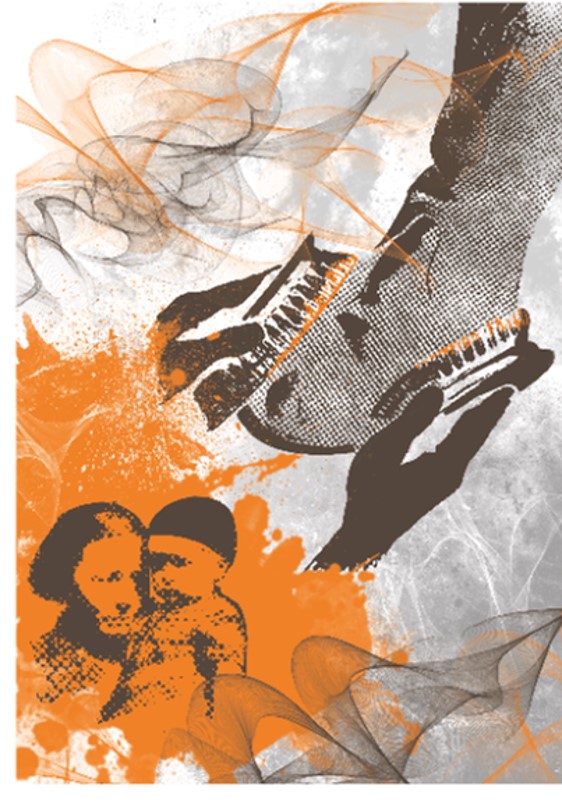
read the story
So, when the Germans occupied Kyiv, the means of subsistence were needed. I couldn’t sit at home, because there was nothing to eat anyway, otherwise we would have died of hunger. Mom was expecting a baby… Yes. And my brother, he was a typical Jew. He looked so much like a Jew that he was not allowed to leave the apartment on the street. And I looked a little less. I looked more like an Assyrian as a kid. And we have a large family of Assyrians nearby, not far away. There were eight children. They were the same age as me.
So we looked like each other. It was impossible to distinguish me in this crowd. And I am with them so that I could earn at least some piece of bread, I cleaned the boots of the Germans, Italians, Magyars …
It was… That’s where it is now… On Tolstoy Square, where the former restaurant “Sport” is right now. Here in this, near this restaurant, and then it was a restaurant only for the Germans, and here we were cleaning the boots of the Germans. We were sitting about ten or fifteen people, like this. All black and all the same. With such chests, two brushes and everyone cleaned their boots. I myself could not walk down the street, because I would have been arrested immediately, because I looked like a Jew, like two drops of water. But in the mass of these Assyrians, I somehow hid and I was not noticeable.
And I could earn at least a piece of bread. I could earn money in order to … My sister needed milk, because she was just born. And the mother was sick, her milk was gone, because of paralysis of the right side. And so, being some ten or eleven years old, such a task lay down on me.
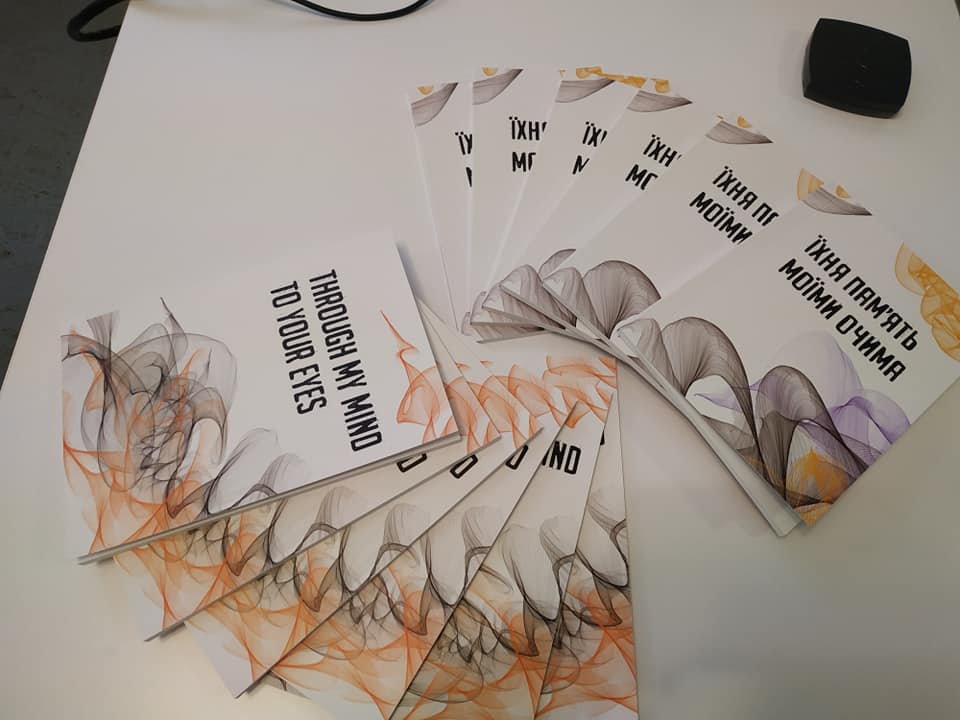
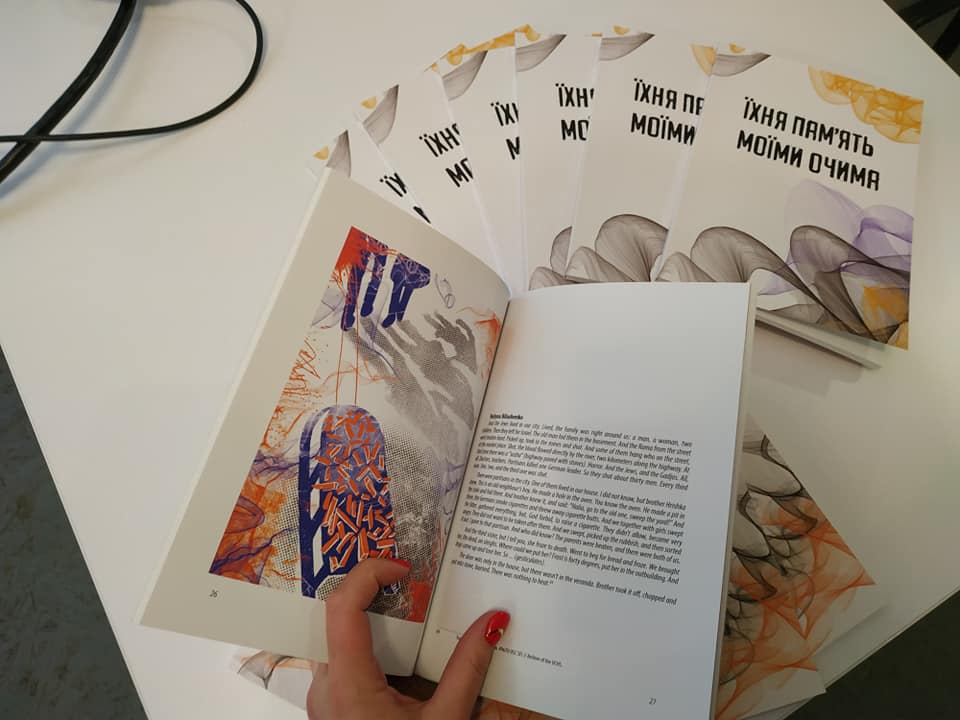
Presentation of the project
During the meeting, the historian and researcher of the Roma genocide, Mykhailo Tyaglyi, shared the results of his scientific research on the course of the genocide on the territory of Ukraine.
Our colleague, a Roma activist
Valery Sukhomlyniv spoke about his experience of recording interviews as part of the Shoah Foundation project and communicating with some of the heroes of the exhibition.
Tetiana Storozhko, the author of the study, focused on highlighting modern approaches and forms of working with memory.
Interactive workshop in Nizhyn
The next destination on the exhibition’s itinerary was the city of Nizhyn, located in the Chernihiv region. Here we were received by the head of the local Roma public organization “Zor”, Maryna Bublyk. With her support, we managed to organize an interactive workshop with Roma children in one of the local schools.
But how to talk about a difficult tragic topic with an audience whose age ranges from 8 to 14? The most diverse approaches of informal education were used – elements of storytelling, art and work in groups, where the elders took responsibility and helped the younger comrades to cope with the tasks. The author’s method of interactive classes was developed by Tetiana Storozhko.